


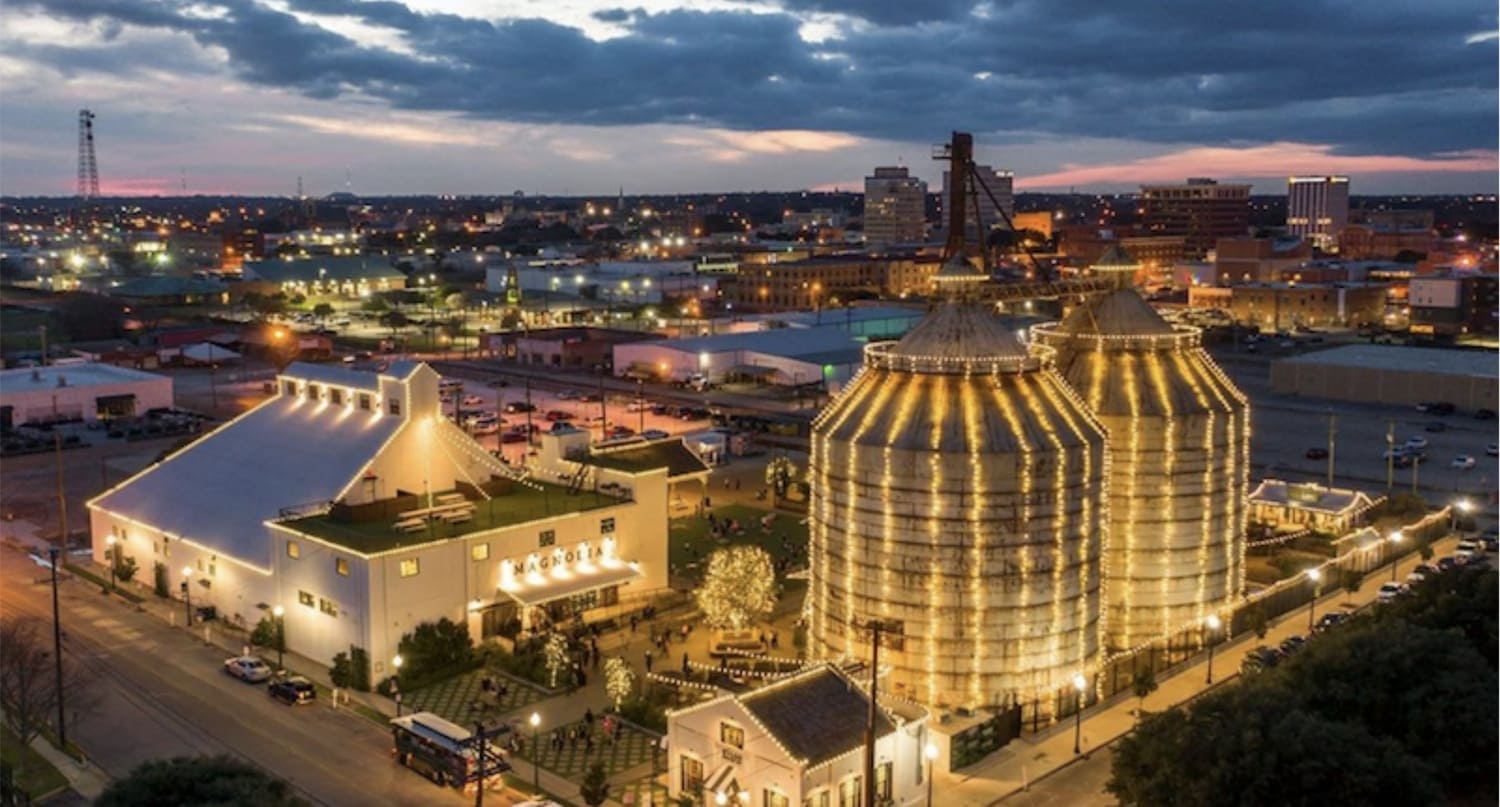
A decade after Chip and Joanna Gaines first put Waco on the national map through their HGTV show, the city’s transformation from an overlooked Central Texas stop into a thriving tourism destination continues to reshape its economy and identity.
Waco welcomed an estimated 4.5 million visitors in 2025, generating more than $800 million in economic impact, according to the Waco Convention and Visitors Bureau. While the Magnolia Market at the Silos remains the primary draw, the ripple effects have spread far beyond the Gaines’ enterprise.
“Magnolia was the spark, but what’s happened since goes way beyond one brand,” said CVB director Carla Pendergraft. “We now have a thriving downtown, dozens of new restaurants, and a hotel scene that didn’t exist ten years ago.”
The city’s downtown district, which was largely vacant a decade ago, now features more than 60 locally owned shops, restaurants, and galleries. Hotel inventory has nearly tripled since 2015, with several boutique properties joining national chain hotels near the interstate.
Not all residents have embraced the changes. Some longtime Wacoans point to rising housing costs and increased traffic as downsides of rapid growth. A recent city study found that median home prices in the 76706 zip code, which includes the Magnolia complex, have risen more than 60 percent since 2016.
“It’s complicated,” said third-generation resident Martin Schultz. “I’m glad people are discovering Waco, but the cost of living here has gone up a lot. You have to make sure the people who were here before the boom aren’t priced out.”
City leaders say they’re aware of the tension and have implemented affordable housing programs and small business support initiatives. A new community development fund provides grants to local entrepreneurs looking to open businesses outside the main tourist corridor.
“We want growth that lifts everyone,” said Mayor Dillon Meek. “That means investing in neighborhoods and people, not just attractions.”
