


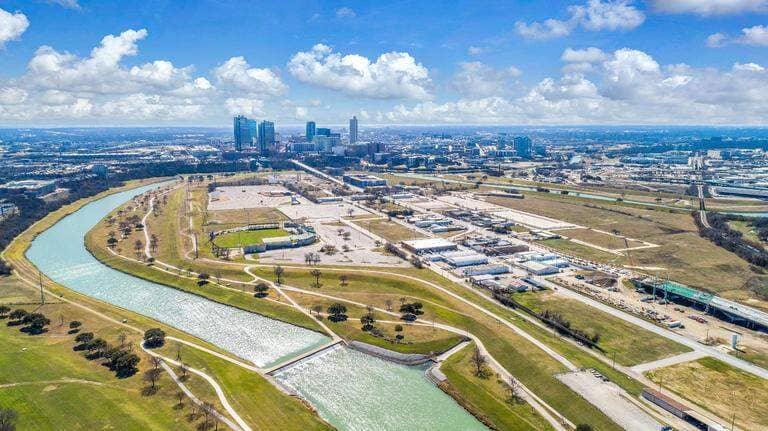
Fort Worth Mayor Mattie Parker unveiled an ambitious $85 million plan Monday to transform a long-neglected stretch of the Trinity River corridor into a vibrant public amenity featuring miles of new trails, green space, event venues, and mixed-use development — a project that city officials say will reshape the relationship between downtown Fort Worth and the waterway that runs through it.
The Trinity River Vision Riverfront Redevelopment Plan, developed over two years in partnership with the Tarrant Regional Water District and a coalition of private developers, calls for the creation of 4.2 miles of new riverside trail, the construction of two new pedestrian bridges, the development of a lakeside amphitheater capable of hosting up to 5,000 spectators, and the transformation of former industrial parcels into mixed-income housing and retail space.
“Fort Worth has one of the most underutilized natural assets in Texas right along our downtown core,” Mayor Parker said at a presentation before the Fort Worth City Council. “Other cities have invested in their waterfronts and seen tremendous economic and quality-of-life returns. It is time for Fort Worth to do the same.”
The redevelopment would be centered on a newly created bypass channel that creates a 33-acre lake just north of the downtown core — a project that has been in planning for years as part of the broader Trinity River Vision program. The bypass channel is already under construction as a flood mitigation measure, and the new plan layers recreational and mixed-use development on top of that infrastructure investment.
City planning director Carolyn Hernandez said the project had been designed with extensive community input, including surveys of more than 4,000 residents and a series of design charrettes held in neighborhoods adjacent to the river corridor. She said the plan prioritized public access and affordability as central values.
“This is not a plan for tourists or for one demographic group,” Hernandez said. “Every Fort Worth resident should feel ownership over this riverfront. The public spaces will be truly public, the trails will be free, and the housing component includes meaningful affordable units.”
The $85 million investment would be funded through a combination of city capital funds, Tarrant Regional Water District contributions, federal outdoor recreation grants, and private investment from developers who have committed to projects along the corridor under a development framework tied to the plan. City officials said they anticipated the private investment component alone could reach $200 million over the next decade.
Local business groups were enthusiastic about the plan, with the Fort Worth Chamber of Commerce issuing a statement calling it a generational opportunity to elevate the city’s economic profile and quality of life. The hospitality industry, which has seen Fort Worth compete vigorously with Dallas for conventions and tourism, said the riverfront project could be a powerful differentiator in attracting visitors.
The City Council was expected to vote on the plan at its next meeting in February. If approved, initial groundbreaking on the first phase of recreational infrastructure was targeted for fall 2026, with the full buildout of the trail system projected to be complete by 2029.
Advocates for affordable housing said they would be watching closely to ensure that the anti-displacement commitments in the plan were honored as development pressure in the corridor increased. “Riverfront investment is great for the city, but we need to make sure that longtime residents of these neighborhoods benefit and aren’t pushed out,” said Maria Solano, director of the Fort Worth Housing Coalition.
