


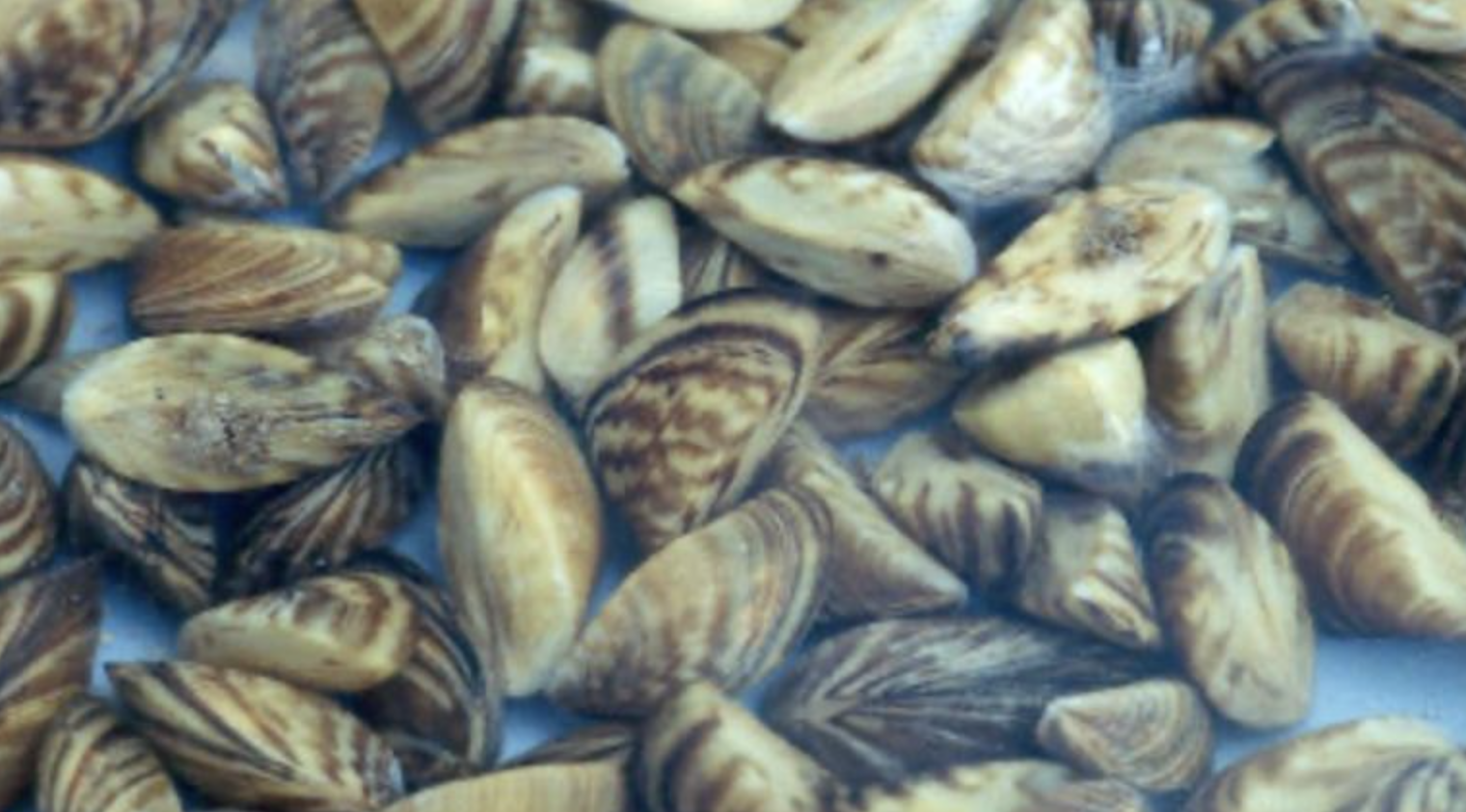
Texas Parks and Wildlife officials have announced that a West Texas lake has become fully infested with an invasive species known for damaging boats and water supply infrastructure.
Last week, the Texas Parks and Wildlife Department (TPWD) designated Lake Meredith, near Amarillo, as fully infested with the non-native shellfish known as zebra mussels.
Zebra mussels are native to Eurasia and arrived in North America in the late 1980s, first invading the Great Lakes region. Since then, zebra mussels and their close relative, the quagga mussel, have spread to numerous states through the Mississippi River watershed. The species has also spread by attaching itself to boats and has reached as far west as California.
Zebra mussels pose a significant threat to Texas lakes because they alter aquatic ecosystems and harm native species. They also litter lake shorelines on lakes with sharp shells that create hazards for recreational users.
Currently, eight river basins inn Texas are confirmed to contain zebra mussels, including the Canadian, Red, Trinity, Brazos, Colorado, Guadalupe, San Antonio, and Rio Grande river basins. Quagga mussels have only been detected in the Rio Grande Basin.
At least 35 Texas lakes have been classified as fully infested with zebra mussels, including Lakes Belton, Eagle Mountain, Georgetown, Grapevine, Meredith, Ray Roberts, and Texoma.
Other lakes including, Dunlap, Fort Phantom Hill, Fishing Hole, Lavon, and McQueeney have tested positive for zebra mussels or their larvae. Quagga mussel larvae has been detected in Lake Amistead near Del Rio.
In a press release, TPWD said staff from the Amarillo Fisheries District conducted shoreline surveys and found zebra mussels of varying sizes at every location inspected.
“Unfortunately, detection of zebra mussels at Lake Meredith is a continuation of a trend in recent years of westward spread of this highly invasive species to new Texas lakes and this new infestation in a new river basin in the Panhandle provides a particularly concerning steppingstone for further spread to uninvaded western states,” said Monica McGarrity, TPWD senior scientist for aquatic invasive species. “As boaters visit waterbodies anywhere in the state—or visit from other states, it’s important they take steps to properly clean, drain, and dry boats, or have vessels stored in invaded lakes professionally decontaminated. These important steps not only prevent the spread of zebra mussels and other aquatic invasive species but also help anglers avoid facing state fines or even delays for watercraft decontamination as they travel between states.”
As the invasive species continues to spread, Joe Graff, acting superintendent of Lake Meredith National Recreation Area, urged visitors to clean, drain, and dry their boats before traveling to another lake to help prevent further infestations.
“The National Park Service remains committed to collaborating with our state and local partners to monitor and minimize the spread of zebra mussels and to safeguard the long-term health of Lake Meredith,” Graff said. “Ongoing coordination among agencies, community organizations, and the recreating public is essential as we address this presence in the lake. We encourage visitors to remain informed, utilize designated cleaning stations, and adhere to all ‘clean, drain, dry’ requirements to help prevent additional spread.”
