


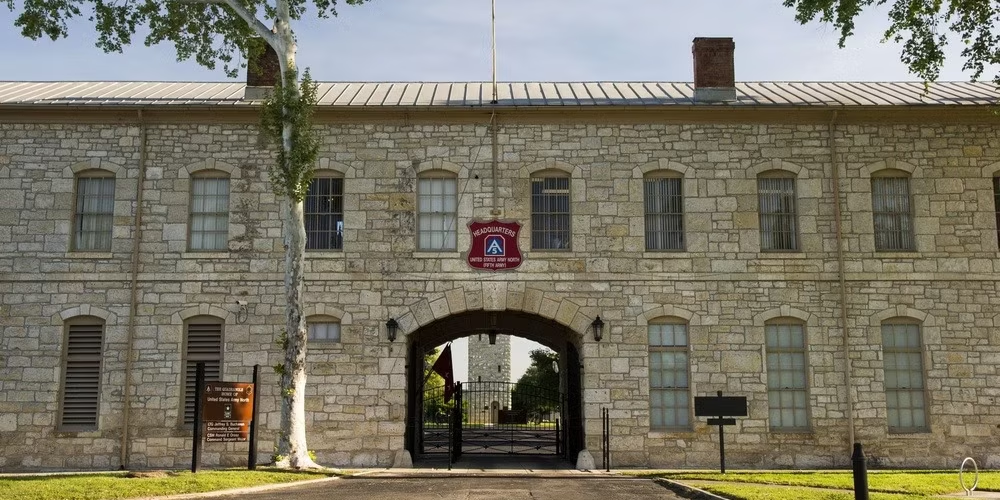
After more than 5,000 medical students at Joint Base San Antonio-Fort Sam Houston were relocated because of infrastructure and climate control concerns, the Department of Defense has announced plans to demolish the barracks in September.
Earlier this week, it was reported that about 5,200 medical students on the base were moved out of their dormitories and into temporary on-base lodging.
According to KSAT, people contacted the station, saying mold in the dormitories was forcing students to relocate. However a spokesperson for JBSA said the decision was not because of mold.
“This decision was made based on continuing infrastructure degradation that is rooted in the campus construction and can no longer be resolved through routine maintenance or ongoing repairs,” a JBSA official wrote in a statement to KSAT.
According to a press release from U.S. Rep. Joaquin Castro, (D-Texas) the Department of Defense Barracks Task Force identified five barracks on the base that should be demolished and replaced because of severe mold, humidity, and construction issues.
Castro’s office said the Department of Defense plans to demolish the barracks in September and begin construction by the end of the year.
He added that the project is expected to cost more than $1.4 billion during fiscal years 2027 and 2028.
“My office has been informed of the Department of Defense’s plans to replace five barracks at Joint Base San Antonio-Ft. Sam Houston that have been plagued by mold and faulty construction. Replacing these barracks, which hold 6,000 medical trainees for the Army, Navy, and Air Force, will cost well over a billion dollars. It’s critical that the Pentagon not repeat the construction mistakes of the past and provide quality housing that meets the needs of our servicemembers,” Castro said.
A JBSA spokesperson said the student relocation is being carried out in phases, with approximately 2,000 students having been moved since the beginning of July.
KENS 5 also reported that the base is using existing base infrastructure and transportation to help students maintain their training schedules.
